Meet your therapist
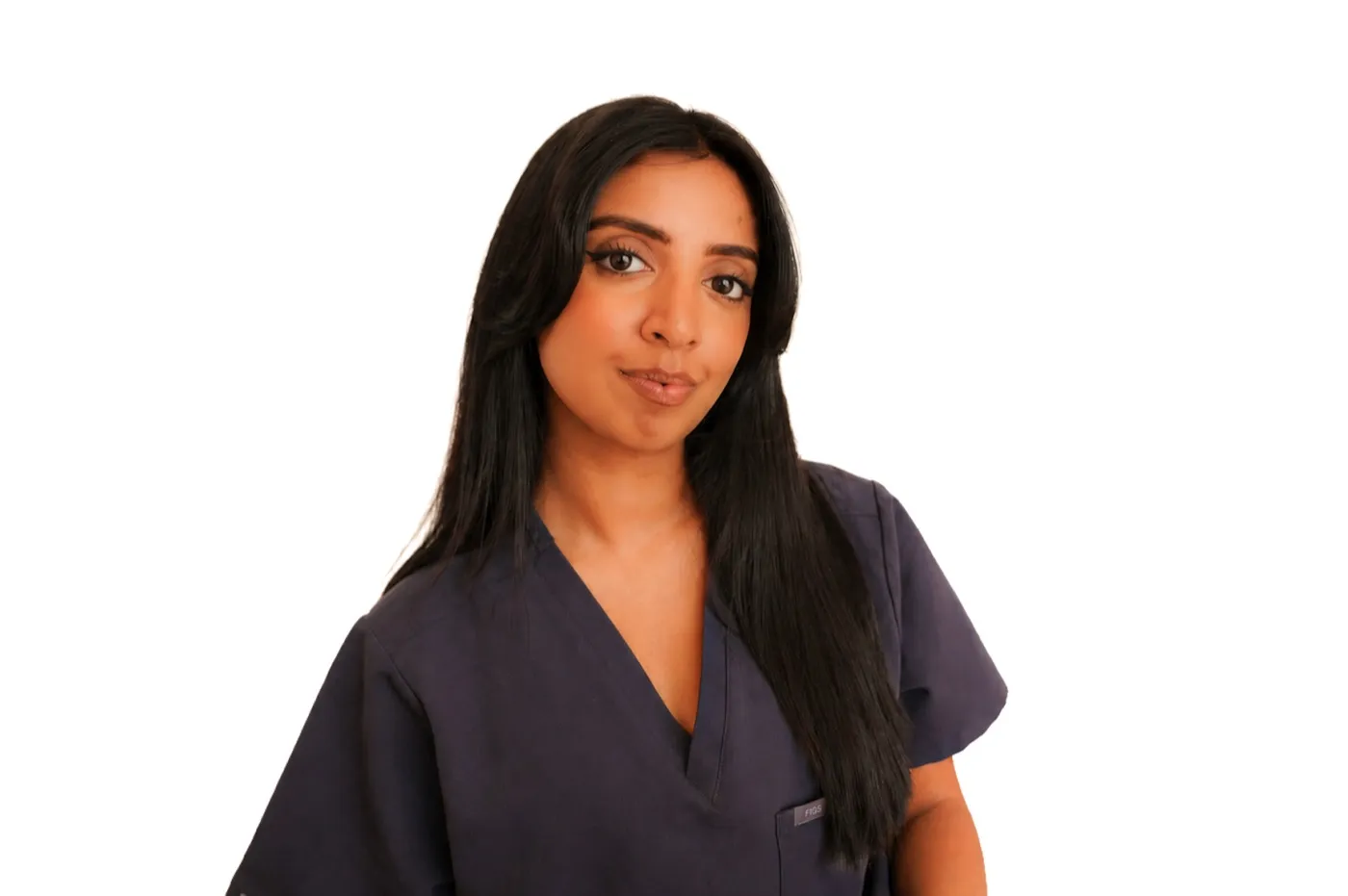
Hello, I'm Rajni Davegun
I'm an independent speech and language therapist, and I've spent more than five years working with children and young people — in the NHS, in schools, in the community, and now here.
My job is to work out how a child communicates, and then to help everyone else meet them there. I've worked with children who talk all day and cannot be understood, children who don't use speech, children who learn language in whole chunks before they take it apart (gestalt language processing), children who use a communication app or a book instead of their voice (AAC), and children who talk happily at home and freeze at the school gate.
Every child communicates in their own way. So I start with what a child can already do, what they like, and how they prefer to say things — and then I look at what is getting in the way. That is rarely only the child. Sensory needs, how a child is feeling, the noise in the room and the way adults talk all change how much of themselves a child can bring to a conversation.
Two more things worth knowing. I still work part time for a local authority, as a Highly Specialist Band 7 therapist in an Alternative Provision Specialist Taskforce Team — so I see the system from inside as well as outside. And I'm Bond Solon trained in writing expert witness reports, which is why the reports I write for tribunals hold up.
Credentials
- Highly Specialist Speech and Language Therapist — over five years' clinical experience across NHS, independent, education and community settings
- BSc (Hons) Speech & Language Therapy — University of St Mark & St John, Plymouth
- Registered with the Health & Care Professions Council — SL038484
- Royal College of Speech and Language Therapists — RC0040903
- Bond Solon trained in expert witness report writing
- Band 7 Highly Specialist Therapist, Local Authority Alternative Provision Specialist Taskforce Team (part time)
- Enhanced DBS checked, and fully insured
- Recognised Bupa provider
Particular experience with autism, social communication differences, gestalt language processing, AAC, and complex communication needs.
Training and continued professional development
- UK Live Gestalt Language Training, Meaningful Speech (2023)
- SOS Approach to Feeding Conference, Dr Kay Toomey and associates (2023)
- Introduction to PROMPT: Technique, PROMPT Institute (18 hours, 2025)
- Intensive Interaction
- Parent Child Interaction Therapy
- Attention Autism
- Curiosity Programme
- SCERTS assessment
- Renfrew Action Picture Test with Blank Levels
- South Tyneside Assessment of Phonology
- CELF-5 (Clinical Evaluation of Language Fundamentals, Fifth Edition)
- ADOS-2 (Autism Diagnostic Observation Schedule, Second Edition), Pearson Clinical Assessment (2-day clinical workshop, 2026)
- Report Writing for Expert Witnesses, Bond Solon (6 CPD hours, 2026)
What neurodiversity-affirming means here
It is a phrase that gets used a lot. These are the things it commits me to.
I never try to make an autistic child seem less autistic.
The goal is being understood, and understanding other people. Not passing as someone else.
Every way of communicating counts the same.
Speech, signing, pointing, gesture, favourite lines from films, a communication app or book. If it carries a message, it counts.
Nobody has to sit still or look at me.
Hand-flapping, rocking, fidgeting and pacing help a lot of children think. That is stimming, and it is allowed here. Eye contact is never a target.
I assume your child understands more than they can show me.
Then I go looking for the way they can show me.
The aim is a child who can say what they want, and say no.
Autonomy and self-advocacy, in whatever way works for them.
Your child can say no, take a break, or leave the room.
Doing as they are told is not a therapy goal. I do not use rewards to train a child into compliance.
Sometimes the thing that changes is the room, not the child.
Communication breaks down in both directions — the adults miss the child as often as the child misses the adults. Researchers call this the double empathy problem.
None of this means "everyone is a bit different". Autistic children are disabled by places that were never built for them, and there is real work to do. Both of those are true at once.
I say an autistic child rather than a child with autism, because most autistic people ask for it that way. If you or your child would rather I said it differently, tell me, and that is what I will use. No fuss.
Ready when you are
Booking and payment happen in one go. Pick a time, and pay at the end of the booking.